What Is Perfume? A Complete Beginner’s Guide
Perfume is much more than a pleasant scent. It is a form of personal expression, a confidence booster, and an invisible accessory that can leave a lasting impression wherever you go. For centuries, people have used fragrances to enhance their appearance, create memorable experiences, and even communicate their personality without saying a single word. Whether you are completely new to fragrances or looking to deepen your understanding of the perfume world, this guide will help you discover what perfume is, how it is made, and why it continues to be one of the most beloved beauty products worldwide.
At its core, perfume is a carefully crafted blend of aromatic ingredients designed to create a unique and appealing scent. These ingredients may include natural essential oils extracted from flowers, fruits, spices, woods, and resins, as well as synthetic aroma molecules developed by modern perfumers. The combination of these elements creates a fragrance that evolves over time after being applied to the skin.
The word “perfume” originates from the Latin phrase per fumum, which means “through smoke.” This name reflects the ancient practice of burning fragrant woods and resins during religious ceremonies and rituals. The history of perfume dates back thousands of years to ancient civilizations such as Egypt, Mesopotamia, India, and China. These cultures used aromatic oils and incense for spiritual purposes, personal grooming, and medicinal treatments.
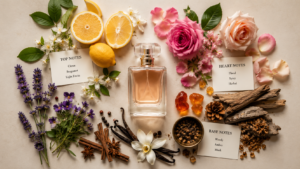
Modern perfumes are typically structured around three layers known as fragrance notes. The top notes are the scents you smell immediately after application. They are usually fresh, light, and short-lived. Heart notes, also called middle notes, emerge after the top notes fade and form the main character of the fragrance. Finally, base notes provide depth and longevity, lingering on the skin for hours and creating the fragrance’s lasting impression.
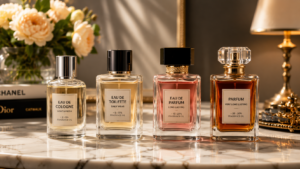
Perfumes are also classified according to their concentration of fragrance oils. Common categories include Eau de Cologne, Eau de Toilette, Eau de Parfum, and Parfum. Generally, higher concentrations result in stronger scents and longer-lasting performance.
One of the most fascinating aspects of perfume is its connection to memory and emotion. The human sense of smell is closely linked to the brain’s emotional center, which is why certain fragrances can instantly remind us of people, places, or special moments from the past. A signature scent can become part of your identity and help create memorable experiences for both you and those around you.
Choosing the right perfume is a personal journey. Some people prefer fresh citrus fragrances, while others gravitate toward floral, woody, oriental, or gourmand scents. The best way to find your ideal fragrance is to explore different scent families and observe how they develop on your skin throughout the day.
Perfume is not simply about smelling good. It is an art form that combines science, creativity, and emotion. By understanding the basics of fragrance composition, history, and application, you can make more informed choices and discover scents that truly reflect your personality and style. Whether you’re searching for your first perfume or expanding your collection, the world of fragrance offers endless possibilities waiting to be explored.