Understanding Perfume Notes: Top, Heart & Base Notes Explained
Have you ever sprayed a perfume and noticed that it smells different after a few minutes, and then changes again a few hours later? This transformation is not accidental. It is the result of a carefully designed fragrance structure known as perfume notes. Understanding perfume notes is one of the most important steps in becoming knowledgeable about fragrances and selecting scents that truly match your preferences.
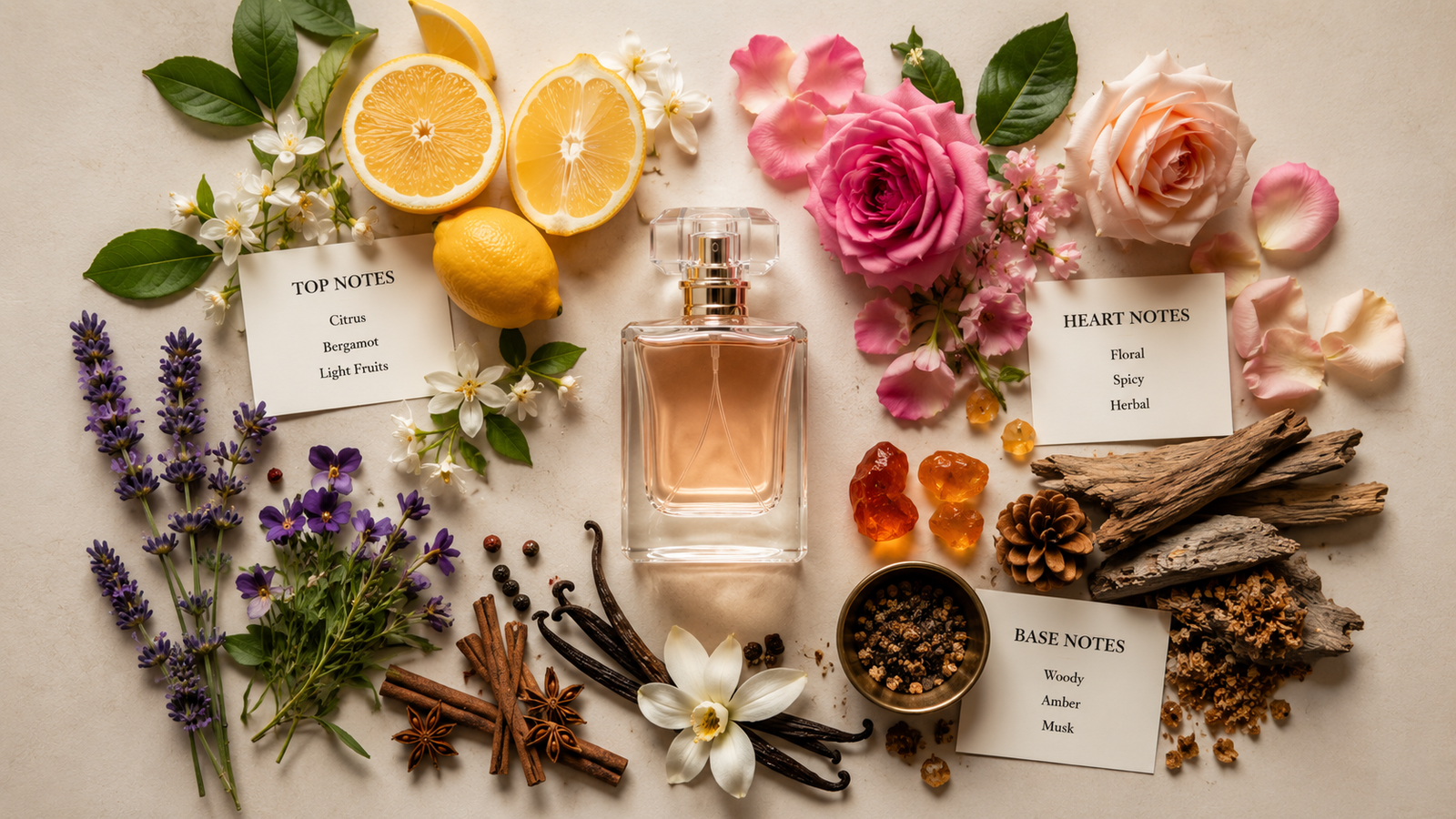
Perfume notes are the individual scent layers that make up a fragrance. Perfumers combine various ingredients to create a scent journey that unfolds gradually over time. These notes are generally divided into three categories: top notes, heart notes, and base notes. Together, they form what is often called a fragrance pyramid.
What Are Top Notes?
Top notes are the first scents you experience immediately after applying a perfume. They create the first impression of a fragrance and are designed to capture attention quickly. Because these ingredients are made up of lighter molecules, they evaporate relatively fast, usually lasting between 15 and 30 minutes.
Common top notes include:
- Lemon
- Bergamot
- Orange
- Grapefruit
- Mint
- Lavender
- Green apple
Top notes are typically fresh, bright, and uplifting. They provide the initial burst of energy that makes a fragrance appealing from the very first spray. However, they represent only a small part of the perfume’s overall character.
What Are Heart Notes?
Once the top notes begin to fade, the heart notes emerge. Also known as middle notes, these scents form the core personality of the fragrance. Heart notes typically appear within 20 to 60 minutes after application and can remain noticeable for several hours.
Popular heart notes include:
- Rose
- Jasmine
- Peony
- Lily
- Lavender
- Cinnamon
- Nutmeg
Heart notes help connect the freshness of the top notes with the richness of the base notes. They add depth, complexity, and balance to the fragrance. When people describe a perfume as floral, spicy, fruity, or aromatic, they are often referring to its heart notes.
What Are Base Notes?
Base notes are the foundation of a perfume. They become most noticeable after the heart notes begin to settle and can last for many hours, sometimes even until the next day. These notes contain heavier molecules that evaporate slowly, providing longevity and depth.
Common base notes include:
- Sandalwood
- Cedarwood
- Amber
- Vanilla
- Musk
- Patchouli
- Tonka Bean
Base notes create the lasting impression of a fragrance. They are responsible for the warmth, richness, and staying power that many people associate with luxury perfumes.
How the Fragrance Pyramid Works
Imagine a perfume as a musical composition. The top notes are the opening melody, the heart notes are the main theme, and the base notes are the lasting finale. Each layer plays an important role in creating a balanced and memorable fragrance experience.
For example, a floral perfume may open with fresh bergamot and lemon, transition into rose and jasmine, and finish with warm vanilla and musk. This gradual evolution keeps the fragrance interesting and dynamic throughout the day.
Why Understanding Notes Matters
Learning about perfume notes can help you make smarter fragrance purchases. Instead of choosing a perfume solely based on the initial spray, you’ll understand how it will develop over time. Many shoppers fall in love with a perfume’s top notes only to discover they dislike its base notes hours later.
By identifying the notes you naturally enjoy, you can narrow your search and find fragrances that better suit your personality, lifestyle, and preferences. If you love warm and comforting scents, look for vanilla, amber, and sandalwood in the base notes. If you prefer fresh fragrances, focus on citrus and green top notes.
Final Thoughts
Perfume is more than a single scent—it’s a carefully crafted experience that unfolds in stages. Top notes provide the first impression, heart notes reveal the fragrance’s true character, and base notes create a lasting memory. Understanding these layers will not only make you a more informed fragrance enthusiast but also help you discover perfumes that you’ll truly enjoy wearing day after day.
The next time you test a perfume, give it time to develop. You may find that its most beautiful notes appear long after the first spray.