Eau de Parfum vs Eau de Toilette: What’s the Difference?
One of the most common questions among fragrance enthusiasts and first-time perfume buyers is: What is the difference between Eau de Parfum and Eau de Toilette? If you’ve ever shopped for a fragrance, you’ve likely noticed these terms on perfume bottles and wondered what they actually mean. While the names may sound sophisticated, the distinction is quite simple. The primary difference lies in the concentration of fragrance oils, which affects a perfume’s strength, longevity, and overall performance.
Understanding these categories can help you choose the right fragrance for your lifestyle, budget, and personal preferences.
What Is Fragrance Concentration?
Every perfume contains a mixture of fragrance oils, alcohol, and water. The percentage of fragrance oils determines how strong and long-lasting the scent will be. Generally, higher concentrations result in richer scents that remain noticeable for longer periods.
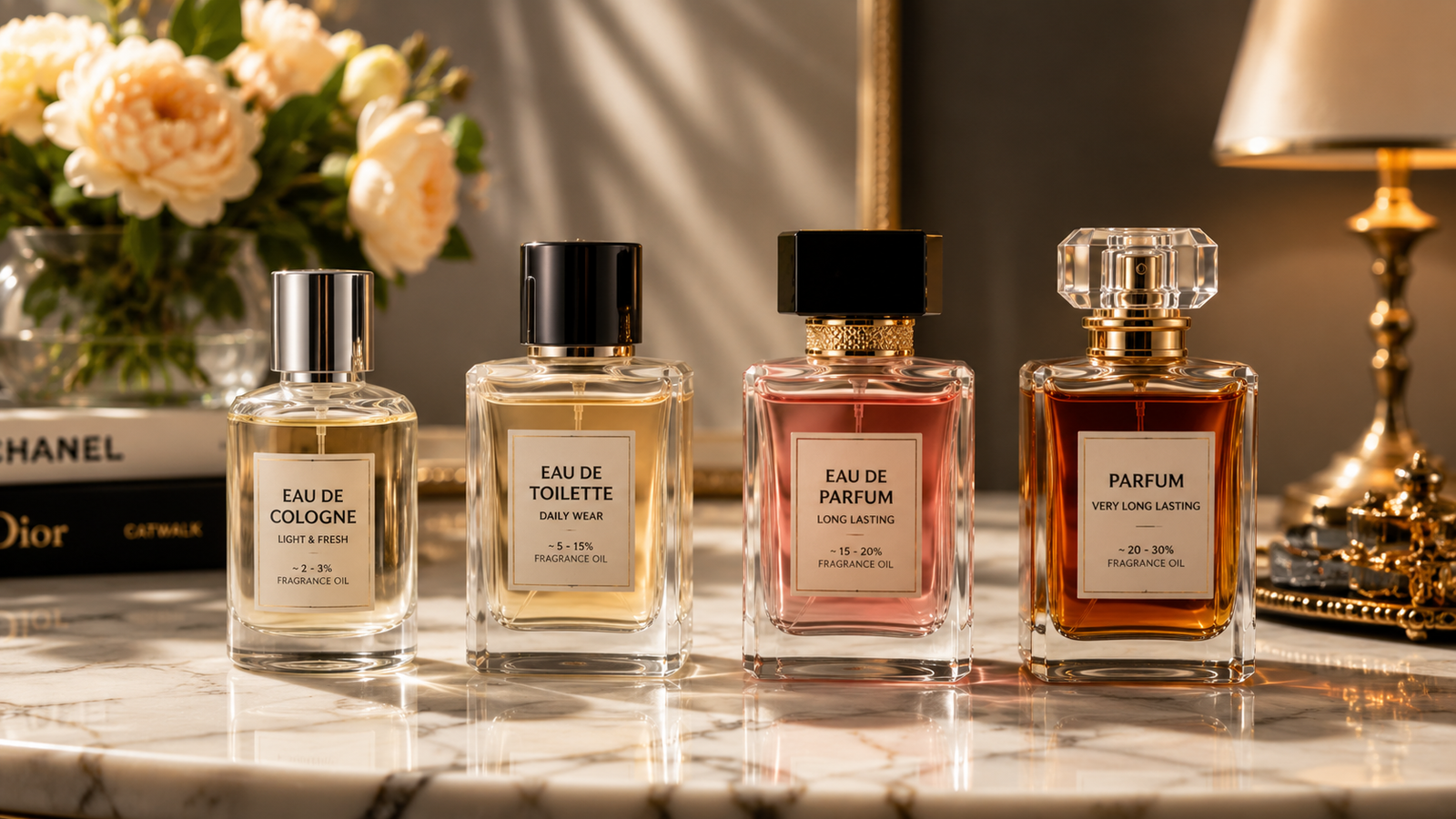
The most common fragrance categories include:
- Eau de Cologne (EDC)
- Eau de Toilette (EDT)
- Eau de Parfum (EDP)
- Parfum (Pure Perfume)
Each category serves a different purpose and appeals to different fragrance preferences.
What Is Eau de Toilette (EDT)?
Eau de Toilette typically contains between 5% and 15% fragrance oil concentration. It is lighter, fresher, and more subtle than Eau de Parfum.
Because of its lighter composition, Eau de Toilette usually lasts between 3 and 6 hours depending on the ingredients, climate, and skin type. These fragrances often emphasize bright citrus, aquatic, green, and aromatic notes that feel refreshing and easy to wear.
Benefits of Eau de Toilette:
- Lighter and fresher scent profile
- Ideal for daytime use
- Perfect for warm weather
- Usually more affordable
- Less overpowering in professional settings
Eau de Toilette is often a popular choice for office wear, casual outings, and people who prefer subtle fragrances that stay close to the skin.
What Is Eau de Parfum (EDP)?
Eau de Parfum contains approximately 15% to 20% fragrance oil concentration. This higher concentration creates a richer, deeper scent with improved longevity.
Most Eau de Parfum fragrances last between 6 and 10 hours, with some premium formulations lasting even longer. These perfumes often showcase more complex heart and base notes, allowing the fragrance to develop beautifully throughout the day.
Benefits of Eau de Parfum:
- Longer-lasting fragrance
- Greater scent depth and complexity
- Stronger projection
- Requires fewer reapplications
- Suitable for evening wear and special occasions
Eau de Parfum is ideal for people who want their fragrance to remain noticeable throughout the day without carrying a bottle for touch-ups.
Comparing EDT and EDP
| Feature | Eau de Toilette | Eau de Parfum |
|---|---|---|
| Fragrance Oil | 5%–15% | 15%–20% |
| Longevity | 3–6 Hours | 6–10 Hours |
| Intensity | Light to Moderate | Moderate to Strong |
| Best For | Daytime, Office, Summer | Evening, Events, Cooler Weather |
| Price | Usually Lower | Usually Higher |
Although Eau de Parfum generally lasts longer, this does not automatically make it better. The right choice depends entirely on your personal needs and preferences.
Which One Should You Choose?
Choose Eau de Toilette if:
- You prefer lighter fragrances.
- You live in a hot climate.
- You want an everyday scent.
- You work in close-contact environments.
- You enjoy reapplying fragrance during the day.
Choose Eau de Parfum if:
- You want longer-lasting performance.
- You enjoy richer, deeper scents.
- You attend formal events frequently.
- You prefer stronger fragrance projection.
- You want better value per spray.
Does Higher Concentration Always Mean Better?
Not necessarily. A perfume’s quality depends on its ingredients, composition, and craftsmanship rather than concentration alone.
Some Eau de Toilette fragrances are beautifully balanced and can outperform poorly formulated Eau de Parfums. Additionally, certain scent profiles such as citrus and aquatic fragrances often work better in lighter concentrations because they are designed to feel fresh and airy.
The best approach is to focus on how a fragrance smells and performs on your skin rather than simply choosing the strongest option available.
Final Thoughts
Understanding the difference between Eau de Toilette and Eau de Parfum can make fragrance shopping much easier. Eau de Toilette offers freshness, versatility, and affordability, while Eau de Parfum provides greater longevity, depth, and presence. Neither is inherently better than the other—they simply serve different purposes.
When choosing between the two, consider where you’ll wear the fragrance, how long you want it to last, and the impression you’d like to make. By understanding fragrance concentrations, you’ll be better equipped to find perfumes that perfectly suit your lifestyle and personality.